This block tends to show up in the small arithmetic done on someone else’s behalf. Quoting a price and shaving it before it’s spoken, because you’ve already imagined their flinch. Rounding the invoice down. Doing the extra thing free because asking felt heavier than doing. Nobody bargained you down; the negotiation happened privately, in your head, and you represented the other side.
One way to read the undercharge: it isn’t modesty about the work. It’s a belief about the relationship — that the goodwill is fragile, and the full price would test it. So the price arrives pre-tested, pre-shrunk, and the goodwill is preserved at a cost only one party is paying.
What it may be protecting
Being easy to say yes to is a kind of safety. The full number risks a pause, and the pause feels like the whole relationship wobbling — though it rarely is. What the discount actually buys is the certainty of never finding out what the work is worth to the person receiving it. This reading invites you to notice that people generally pay what they’re asked by someone who expects to be paid it.
The card that opened it
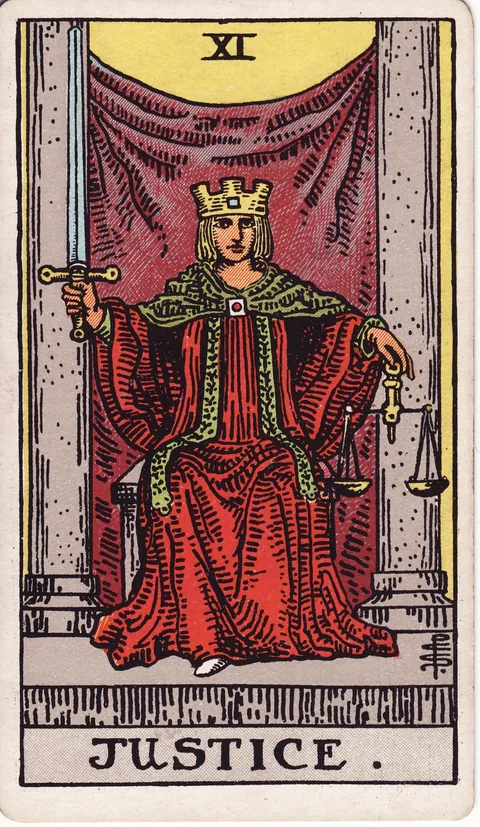
Justice sits square to the viewer, sword up, scales level — the only figure in the majors who looks straight at you. The card doesn’t punish and doesn’t flatter; it weighs. Read as a block, its instruction is almost administrative: stop doing the weighing in advance, on the other party’s behalf, with your thumb on their side of the scales. Present the thing. Let the scales do their one job.
In your timing
Timing sharpens this one. Under an exacting sun — Virgo most of all — the undercharge hides inside craft — the price shaved as one more quality check. Under a waxing moon, the quotes sent now tend to set the level for the season, and that cuts both ways: the trimmed number compounds too. If today’s card happens to be Justice itself, read the coincidence kindly — the scales came to sit with you, not to sentence you.
One move
On the next quote, invoice or ask: write the number you first think of, notice the urge to trim it, and send the untrimmed number. Once. Watch what actually happens — not what the flinch predicted. The gap between the two is the block, measured.